Is Hakone Worth Visiting? My Two-Night Stay
Flying out to Japan, Hakone was the destination I knew the least about, but the little I did know intrigued me the most. The area is known for its onsen hot spring resorts, and experiencing one was high on my Japan wishlist.
Before arriving in Hakone, I made a last-minute change to my hotel. I had not managed to reserve a private onsen, so I upgraded my room at Blisstia Hakone Sengokuhara Hotel to one with an outdoor bath instead. In the end, it gave me almost exactly the experience I hoped for.
Some links in this review are affiliate links, to learn more about how we use these, read our disclaimer.
- Where is Hakone?
- Hakone Day Trip or Overnight Stay?
- Where to Stay in Hakone
- How to Get to Hakone from Tokyo
- First Impressions of Hakone
- Getting to Blisstia Hakone Sengokuhara Hotel
- Checking Into Blisstia Hakone Sengokuhara
- The Rooms and Outdoor Bath Experience
- My 2-Night Hakone Itinerary
- Using Hakone as a Break Between Tokyo and Kyoto
- Is One Night in Hakone Enough?
- What I Loved About Staying Overnight in Hakone
- What I Didn’t Love About Staying Overnight in Hakone
- What I’d Do Differently Next Time
- Final Verdict: Was Staying Overnight in Hakone Worth It?
Where is Hakone?
Hakone is located 50 miles southwest of Tokyo, in the Kanagawa Prefecture. Hakone is an onsen town, in a much more mountainous area, than the cities on my trip. It is popular for its proximity to Lake Ashi, Owakudani ropeway and the high potential of Mt Fuji views.
In a hurry? Plan everything here
Activities:
Accommodation:
Hakone Day Trip or Overnight Stay?
If you are debating between a Hakone day trip or an overnight stay, I would recommend staying overnight. A day trip is possible, but Hakone is a slow-paced destination with lots of transport between sights, so it can quickly feel rushed.
One night is enough if your main goal is to experience a Hakone hotel, outdoor bath or onsen-style stay. However, two nights is better if you want a full day to explore the Hakone loop, use the Hakone Freepass properly, and still have time to relax.
For me, the hotel was a huge part of why I loved Hakone, so I would not have enjoyed it as much as a rushed day trip from Tokyo.
Where to Stay in Hakone
For my stay in Hakone, I stayed at the Blisstia Hakone, which was my favourite hotel in Japan. It felt like the perfect harmony between modern and traditional. I loved having the option to upgrade my room to include an outdoor bath, heated by the area’s natural hot springs. It gave me a similar experience to an onsen, but with much more privacy. This hotel is adults-only, making it the perfect spot for couples or anyone looking for a relaxing stay.
How to Get to Hakone from Tokyo
Getting to Hakone from Tokyo couldn’t be easier. For me, the easiest option was the Romancecar from Odakyu Shinjuku Station to Hakone-Yumoto. It was direct, comfortable, and easy to book in advance, which made it a great option for my first visit to Hakone.
The Romancecar is an all-reserved service, so you need a Limited Express ticket alongside your normal fare or Hakone Freepass. From Shinjuku to Hakone-Yumoto, the surcharge is currently ¥1,200. I’d book ahead if you are travelling together and want neighbouring seats.
The journey on the Romancecar to Hakone was relaxed, with big comfortable seats. The only stress being navigating Odakyu Shinjuku Station. But the staff in Japan were all too happy to help. And the views were beautiful, even if I did not get to see Mt Fuji.
I’ll cover the full transport route and Hakone Freepass in more detail in a separate guide, but for this overnight stay, arriving by Romancecar and travelling light made the whole experience much easier.
Booking your Hakone transport
I used the Hakone Freepass during my stay, which made getting around much easier. If you want to arrange your transport before travelling, GetYourGuide offers a Hakone transport pass covering trains, buses, the ropeway and sightseeing cruise.
First Impressions of Hakone
I arrived in Hakone by train, stepping off the Romancecar at Hakone-Yumoto Station. The station is relatively small, especially compared to the megacities that Tokyo’s can feel like. And that made it a lot easier to navigate.
Stepping out of the station, there’s a small strip with quaint, local-feeling shops. It is a good idea to grab a few things here for your stay, as you may want to enjoy the comfort of your room.
Getting to Blisstia Hakone Sengokuhara Hotel
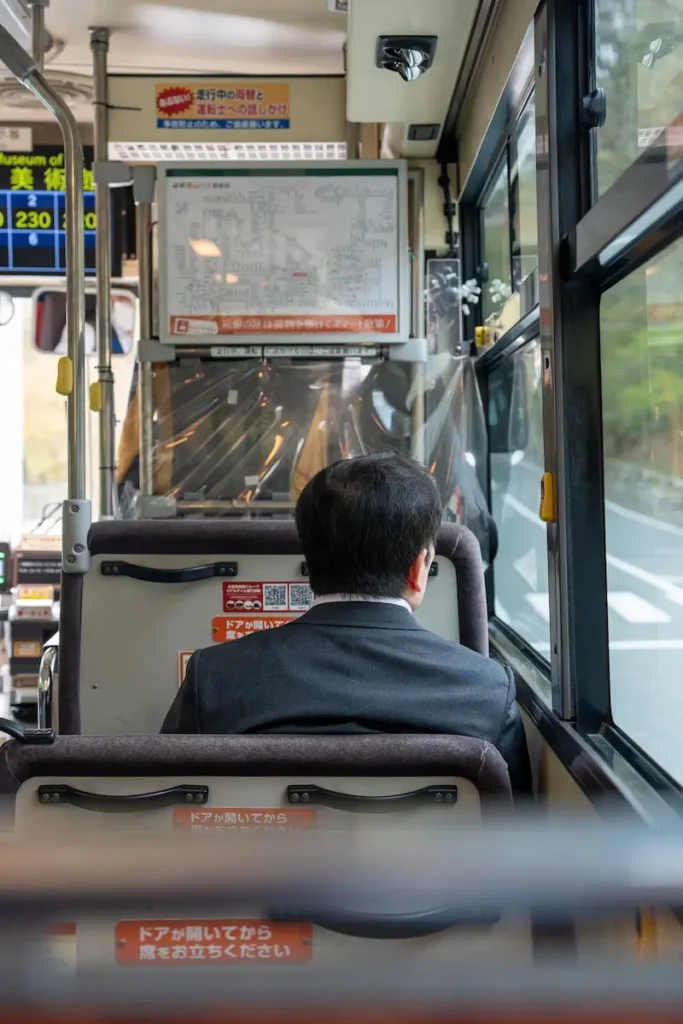
I had no bags beyond my backpack, as I posted my suitcase straight to Kyoto where the next hotel was looking after it. Getting a taxi at the station was a bit of a mission, as none of my Uber requests were being accepted. There is a taxi stand which I tried to avoid due to queues, but eventually relented. Luckily the taxi wasn’t too expensive and the view was still scenic.
There is public transport available, and public transport in Hakone is pretty good. If you have a 2-day Hakone Freepass then the majority of buses you take will be covered provided you have activated it. But it is worth bearing in mind some hotels in Hakone are up steep hills, with the bus stop being at the bottom. So the taxi may be easier, especially if you are arriving with luggage.
My hotel, the Blisstia Hakone Sengokuhara Hotel, was up a little hill, but nothing too bad. I had family staying at Hakone Retreat före, which had their bus stop right at the bottom of a very tall and steep climb.
Staying further out gave me a more peaceful hotel experience, but it did mean transport required more planning.
Checking Into Blisstia Hakone Sengokuhara
Across Japan, I stayed in five different hotels, and Blisstia Hakone was by far and beyond my favourite. I did arrive before my room was ready, and sadly there isn’t a bar, or even a bar within walking distance that was open. But you have a 7/11 opposite, so I went to grab some snacks.
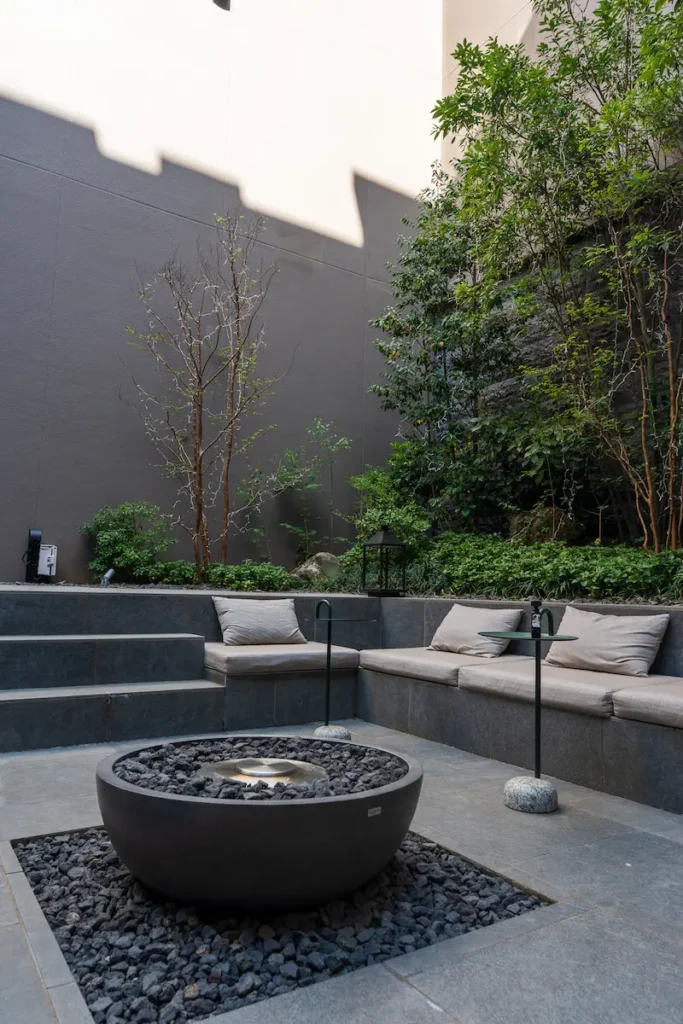
I arrived before my room was ready, but the hotel immediately felt peaceful, clean and modern. There was a quiet courtyard where I waited for a while, which suited me perfectly.
Once my room was ready, the staff explained the onsen rules in case I wanted to use the facilities. I was mainly excited for the outdoor bath in my room, so I immediately forgot, but luckily they have reminders in the onsen itself.
The Rooms and Outdoor Bath Experience
The Room
As soon as you walk in the room you are asked to leave your shoes at the door. I hate shoes indoors anyway but it helps keep the place clean. The room was much bigger than I expected, with twin beds, a lounge area and a clean, modern feel. It felt like somewhere I could properly relax, rather than just a place to sleep.
I am glad I chose to upgrade, as there isn’t a huge amount of evening activities in Hakone, so it’s the town I would be getting the most out of my room. I went out to check the outdoor bath. It is constantly filled, heated by the natural geothermal waters the area is known for. I could not wait to get in.
The Outdoor Bath Experience
Although I initially wanted a private onsen, an outdoor bath wasn’t too dissimilar to an onsen experience. The water was a lot hotter than I expected, but the air was cool. The bath was under cover, with a small garden as a view.
One evening I got back to my hotel just as it began to rain. There was no wind, just a gentle pitter patter that was relaxing. Despite how busy my time in Japan was, this was one my favourite moments. Just relaxing in the warm water, with a bottle of wine I picked up in the 7/11 opposite.
Looking back, I don’t regret upgrading my hotel room in the slightest. That did make it the most expensive hotel of the trip, but even then it cost me £150 a night, which would get you a lot less in the UK.
My 2-Night Hakone Itinerary
Day 1: Arriving and enjoying the hotel
I stayed here for two nights, the first day was mostly consumed by the arrival, upon which I grabbed snacks, relaxed and enjoyed the hotel.
Day 2: Exploring Hakone with the Freepass
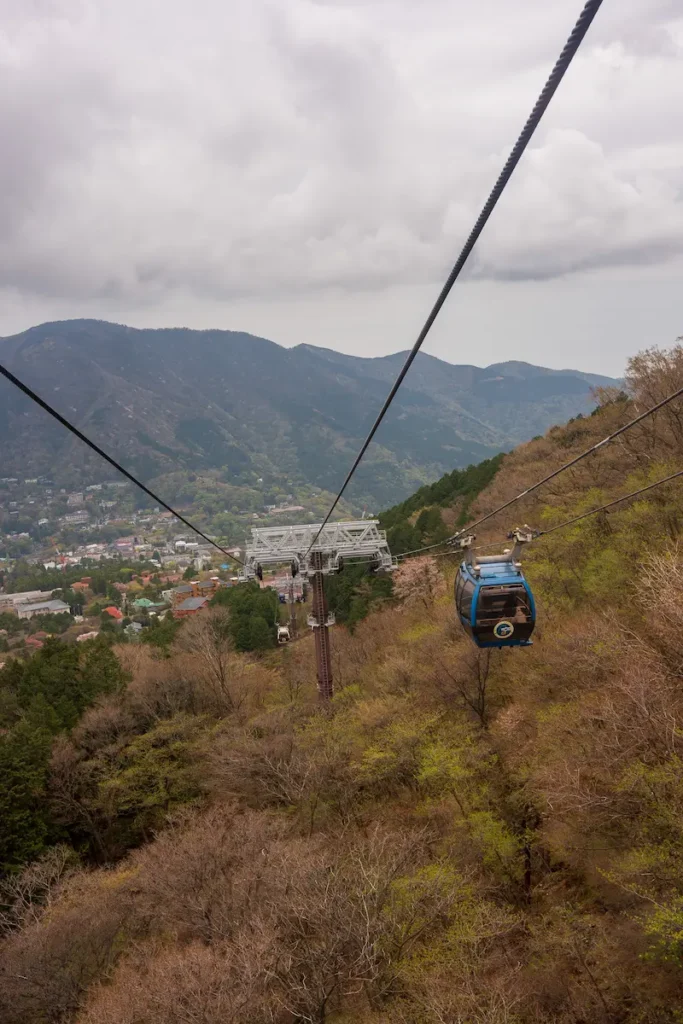
The next day I took advantage of the Hakone Freepass, which was a very busy day navigating public transport, finding places to eat and trying to explore as much as I could before the cable cars closed.
I focused on the classic sightseeing route, including Hakone Shrine, the Ropeway and Lake Ashi. I didn’t get clear views of Mount Fuji, but the scenery still gave the day a completely different feel compared to the city stops along my Japan itinerary.
That evening though I needed a well earned rest, and again the outdoor bath was perfect. But having the lounge area meant I could relax without feeling confined or claustrophobic. I did venture to the hotel’s guest only onsen, to see how it compared. And as nice as it was I preferred the comfort of my private outdoor bath, so went there instead.
Day 3: Travelling onwards towards Kyoto
After two nights in Hakone, it was time for me to move on to Kyoto. I checked out of my hotel after breakfast, and I walked to the bus stop to begin the journey to Odawara Station, where I caught the Shinkansen towards Kyoto.
Using Hakone as a Break Between Tokyo and Kyoto
Hakone is the perfect stop between Tokyo and Kyoto, and I think I positioned it perfectly in my itinerary. When I flew from London, the flight was over 15 hours, and as amazing as Tokyo is, it can feel chaotic.
Kyoto and Osaka would also be busy, although in a different way. Having Hakone shortly after Tokyo gave me a chance to catch my breath, reset my body and prepare for the rest of my trip.
I didn’t have any luggage besides my backpack, as I opted to forward it on to meet me in Kyoto. I felt lightweight and chilled out. It was the most unique spot on my route. Instead of another city, Hakone was a town nestled in the mountains, and it left me refreshed and ready for my next stop.
I’ve included Hakone in my full 12 day Japan itinerary because I think it works perfectly as a slower stop between Tokyo and Kyoto.
Is One Night in Hakone Enough?
One night in Hakone is plenty if your main goal is to experience a hotel, outdoor bath or onsen-style stay. But if you want to properly explore the area, I think two nights is much better.
I would repeat what I did: arrive first from Tokyo in the afternoon, spend the first evening enjoying the hotel, use the next full day to explore Hakone with the Freepass, then travel onwards to Kyoto the following morning.
I would even consider a third night next time, especially if I wanted to use Hakone as a base for a Mount Fuji day trip.
What I Loved About Staying Overnight in Hakone
Hakone was one of my favourite stops in Japan. I loved the slower pace, and the mountain setting. The scenery was a stark contrast from Tokyo, and when exploring so many cities, it’s important to make the trip feel varied.
The Blisstia hotel felt like part of the destination, giving me my onsen experience, and a stay that felt like a blend between traditional Japan and modern luxury. I have been fortunate to stay at some amazing hotels over the years, but the Blisstia Hotel may be my favourite.
What I Didn’t Love About Staying Overnight in Hakone
It is hard not to like Hakone, but that doesn’t mean it had its faults. My main issue is that my hotel didn’t have a bar. Not all hotels will have this issue, and fortunately the room was amazing. But it would have been nice to have a spot where I could get an ice cold beer.
Transport around Hakone is good, but isn’t anywhere near as frequent or painless as Tokyo. If you are trying to squeeze everything into one day, it can feel a bit time pressured and cause you to walk past some spots.
And it is important to remember that Mt Fuji views are never guaranteed. I did not see it during my trip, and if you go without the expectation of seeing it, then it’ll be a lovely bonus.
What I’d Do Differently Next Time
Next time, I would consider booking one extra night, taking my stay to a total of three nights. Hakone is a good place for slower travel and I would have liked more time to explore without watching the clock.
I would also start the Hakone Freepass route earlier in the day, plan food stops more carefully and look into a Mount Fuji day trip. Missing Mount Fuji was my one regret from this part of the trip, although I still think Hakone was worth visiting without seeing it.
Final Verdict: Was Staying Overnight in Hakone Worth It?
Yes, Hakone is well worth an overnight stay. Day-tripping rushes you through a place that is known for being slower-paced, and won’t allow you to appreciate what makes this stop so special.
There was so much that made it unique, and Hakone holds a special place in my heart. Slowing down after Tokyo was really appreciated, and I arrived in Kyoto rejuvenated and ready for adventure.
The other hotels I stayed at in Japan all had their pros and cons, but in terms of style and comfort, none matched Blisstia.