Knife Sharpening Workshop in Kyoto: My Experience
Exploring the markets of Kyoto, one thing I saw a lot of was knife shops. Japanese knives are renowned for their sharpness and quality, making them sought after by chefs across the world. I didn’t intend on buying a Japanese cooking knife, I have zero cooking skills, but I can’t resist a class, and when I saw a knife sharpening workshop my brain instantly romanticised it. Here, you don’t just learn how to sharpen a Japanese knife; you leave with the finished knife you worked on.
Some links in this review are affiliate links, to learn more about how we use these, read our disclaimer.
- Why I booked a Knife Sharpening Workshop
- In a hurry? Plan everything here
- Where the Knife Sharpening Workshop takes place
- Choosing our knifes
- What happens during the knife sharpening workshop
- What I Learned During My Japanese Knife Sharpening Workshop
- What's included in a Knife Sharpening Workshop and what upgrades can I add?
- Would I Recommend a Knife Sharpening Workshop in Kyoto?
- Frequently Asked Questions
- Where to Stay in Kyoto
Why I booked a Knife Sharpening Workshop
A lot of my favourite experiences when I travel have been workshops. Learning a new skill and bringing a souvenir home that I have built with my own two hands is my ideal time to spend a holiday.
I was not interested in buying a premade Japanese knife, I hardly cook and honestly you don’t need a knife when you use Dolmio sauce. But as soon as I saw the chance to do a class and customise my own, I instantly saw my future. Learning to be an expert cook, whipping up dishes for friends, family and romantic evenings.
Ultimately I’m a romantic not a realist, and I haven’t actually cooked anything using it since my return. But I still stand by it being one of my favourite experiences in Japan, and infinitely better than just buying a souvenir.
In a hurry? Plan everything here
Activities:
Accommodation:
Where the Knife Sharpening Workshop takes place
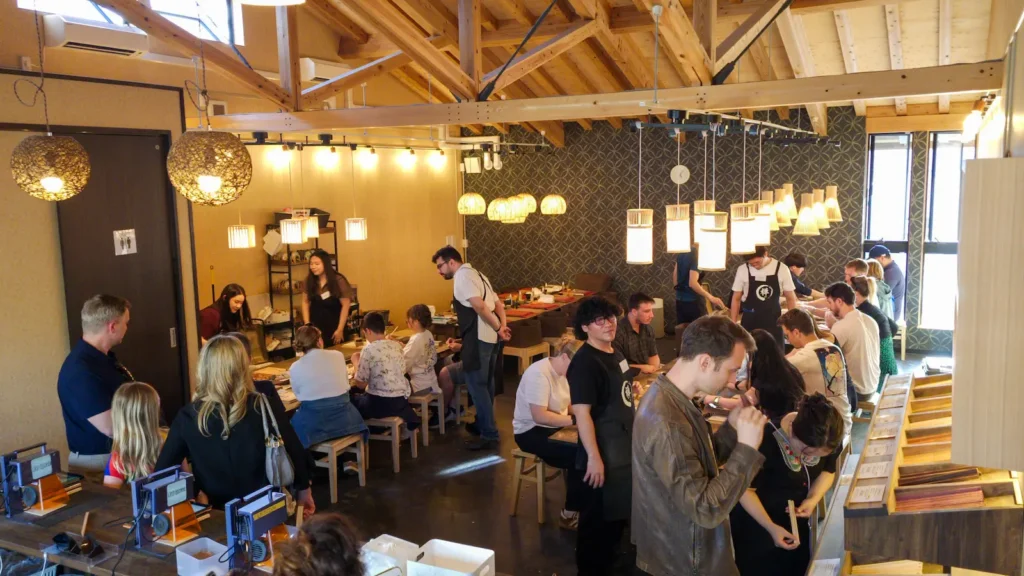
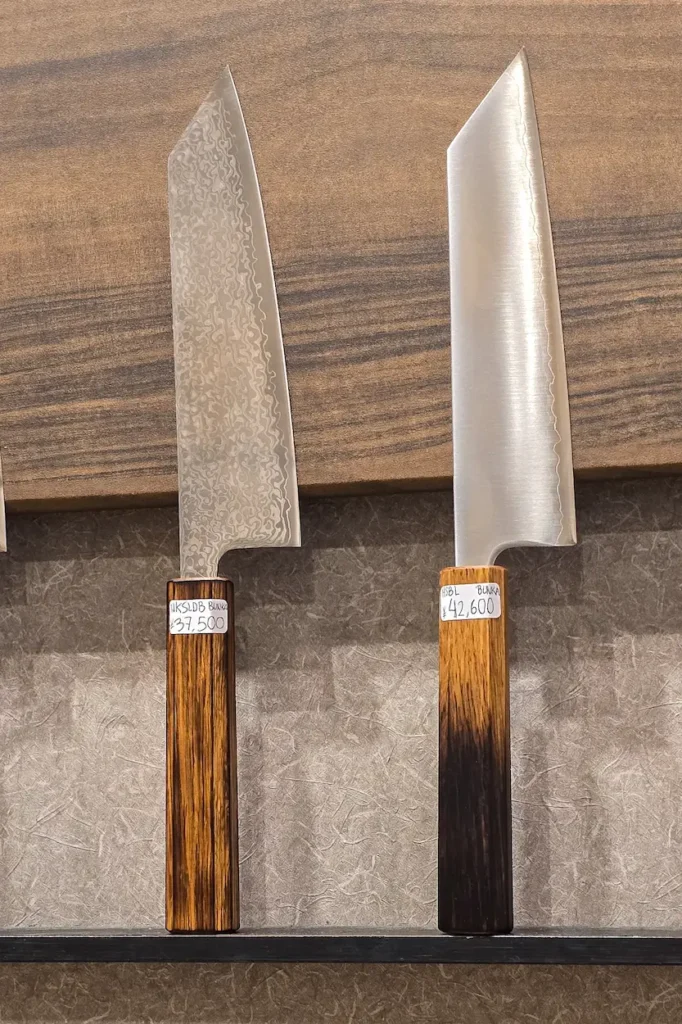
I’m sure you can find venues all across Japan, but I did mine in Kyoto. Right in the heart of the famous Nishiki Market, I found Hamonoya Hirai. My dad was desperate to buy a Japanese Knife, many of which felt out of the range I would have been willing to pay.
I saw the knife sharpening class was ¥25,000, which was actually less than the majority of knives I had seen that day. I signed up. The experience presented better value for money for me. I would have an experience, learn a skill, and take home a souvenir I knew how to properly look after and would last me years to come.
Choosing our knifes
Usually there are three knives that you can choose from for our experience. Each designed for their own purpose in the kitchen. The knives are subject to availability, and when we arrived we were told one was out of stock. I didn’t mind, as I had already decided on the Santoku knife which was available.
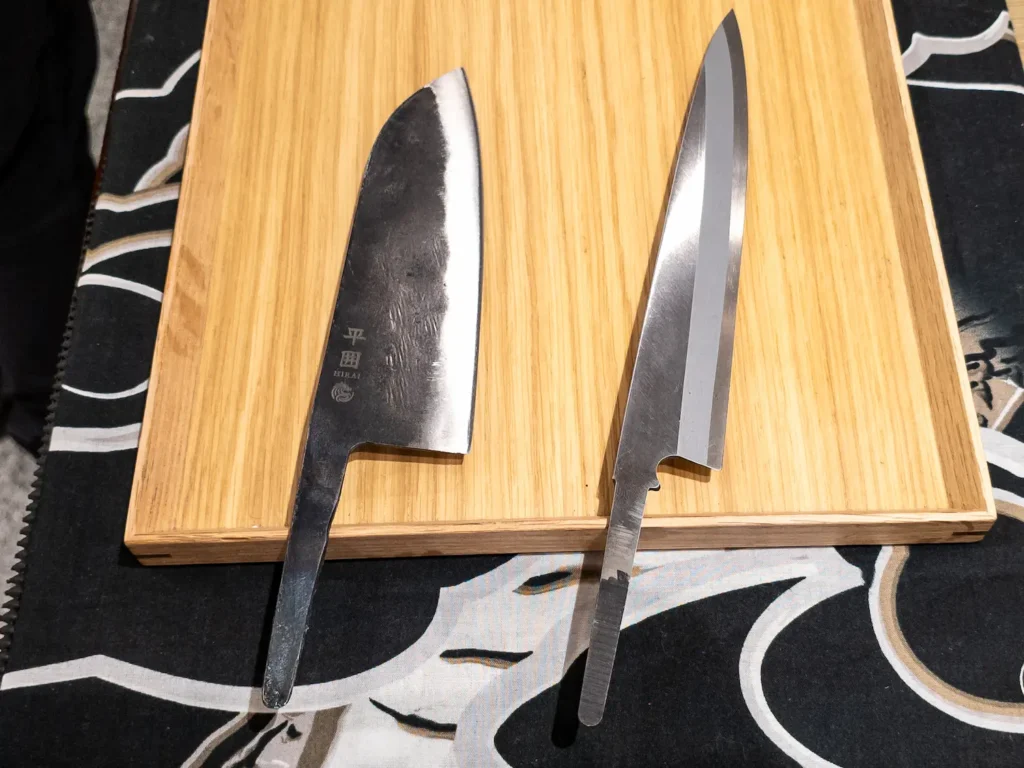
Santoku
This is a double bevelled knife that is considered “all-purpose”. It is generally recommended for home cooking.
Yanagiba
A long thin blade that is perfect for thinner slices and commonly used in sushi. The single-bevel edge makes it ideal for delicate tasks.
Deba
This traditional Japanese knife has a thick and heavy design, This makes it ideal for filleting fish and removing their heads.
What happens during the knife sharpening workshop
The experience is centered around sharpening and creating your own knife. But we are given a bit of education around it so that we can properly maintain our knife. They start by teaching you the importance of sharpening your knife and
The importance of knife sharpening
The class started with us learning a bit of science and the importance of sharpening knives. I found it really interesting when they showed us photos of a blunt and sharpened knife under a microscope.
The Paper Test
We would be given a sheet of paper to cut so we could compare how a blunt knife compared to a sharpened one. It’s something I never considered but visually gave us a great reference.
The blunt knife was jagged and struggled to cut, regularly getting caught as it passed through. Instead of cutting it just ripped through the paper. However the sharpened knife required no effort at all, sliding through like butter.
Practicing the skills
They started us out with some practice knives. These had use across many sessions, by people of all skill levels, so will never be as sharp as our final knives. But they were there to learn the motions and for making mistakes.
We did it a few times, sharpening and bluntening the knives in rotation so we learnt not only what to do but also what not to do.
Sharpening our knives
When our guide was sufficiently happy we had a grasp of the necessary skills, we were given our own final knives. These were the ones that we would be taking home, so it was important we got it right.
Adding the handle
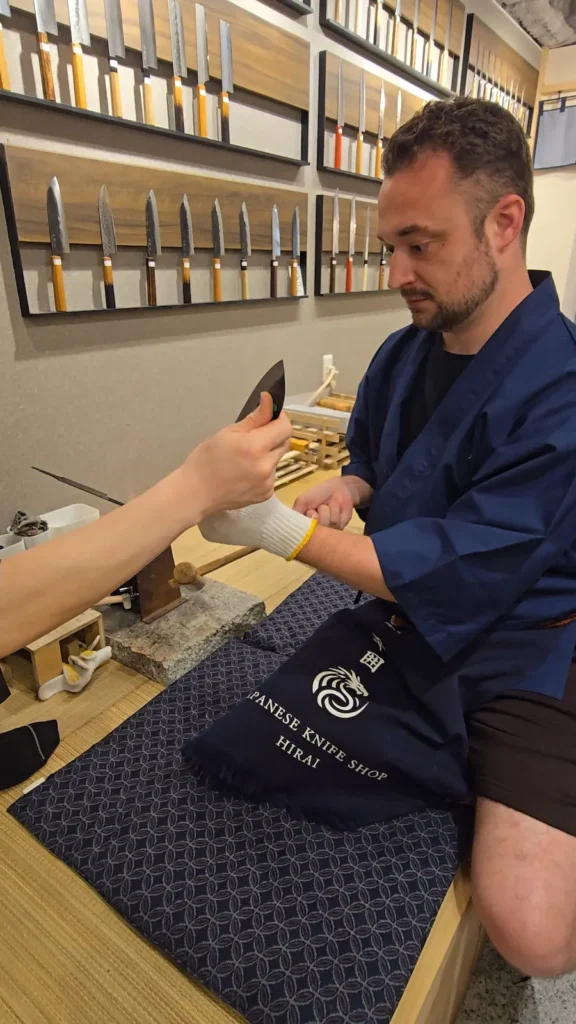
Once I had sharpened our knives, and had approval from our teacher. We made our way downstairs to add the handle. One at a time we handed our knives to one of the experts, who would heat it over a fire, before inserting the handle.
The knife was then handed back to me, where I would use a small wooden hammer to bang the base and ensure it fits snugly. I was a bit nervous about being handed a searing hot chunk of metal, but we were given a thick glove for protection.
Engraving the blade
The final touch before our knives would be complete was engraving. We had two options, laser or hand. I chose to have “Brad” engraved in Japanese. I didn’t want to risk mistranslating it like a tourist with an ill-advised tattoo so I left it to the Japanese master to do it.
We would not be doing the engraving ourselves, rather it was done for us. So we would have to return after an hour to collect it in a simple presentation box. This was my final activity in Kyoto, and an absolutely fantastic one to finish on.
What I Learned During My Japanese Knife Sharpening Workshop
The purpose of this workshop wasn’t just to leave us with our own Japanese cooking knives; it was also to give us the skills and knowledge needed to look after them. Even the best blades will dull over time, so we were taught how to restore the edge when that happens and how, with proper maintenance, our knives could last a lifetime of cooking.
What’s included in a Knife Sharpening Workshop and what upgrades can I add?
Included in the workshop is one knife with the basic beech handle.
During the process you can upgrade your handle to one of a different wood or colour. Since the blade is blackened I went for the dark walnut wood handle, but there was a gradual handle I thought looked awesome.
You can have the knife engraved, although longer names may include additional costs and will have to be laser engraved.
Would I Recommend a Knife Sharpening Workshop in Kyoto?
For me, the workshop was worth it. I wasn’t desperate to buy a Japanese knife, but I certainly wouldn’t have minded bringing one home. I also didn’t want to pay some of the higher prices I had seen in the shops, and this workshop actually cost me less than many of the knives I had been looking at.
If you’d prefer a cheaper, more beginner-friendly workshop in Kyoto, I’d recommend the Chopstick Making Workshop instead.
Where to Stay in Kyoto
During my time in Kyoto, I stayed at Hotel Traveltine Kyoto Kiyamachi. This was my longest hotel stay during the entire Japan trip, so I was very happy that I loved it. The location put me within walking distance of markets, restaurants and many of the activities I had planned around the city.
It was also possible to reach public transport on foot, although once I was reunited with my suitcase, I happily opted for an Uber instead.