
Cisternerne: Copenhagen’s Subterranean Art Scene
With Copenhagen being a city with such a passion for art, it was only natural that I visit an exhibition. I had already seen historic art at the Glyptotek, but now it was time for something more modern. I had heard of a place called “The Cisternerne” which had been converted for new and unconventional art. It came to my attention on an old episode of Travel Man: 48 Hours in Copenhagen, and I couldn’t miss my opportunity to explore myself.
The art changes often, so no visit will ever be the same, and the underground art space is dedicated to one artist at a time. The Cisterns (or Cisternerne in Danish) are former water reservoirs that have been converted into an underground exhibition space. I had spent the morning at the Home of Carlsberg, and after relaxing at the bar, I started to make my way to explore some art. The Cisterns are a short walk away in Søndermarken Park.
Some links in this review are affiliate links, to learn more about how we use these, read our disclaimer.
A walk through Søndermarken Park
Unlike most art museums, this isn’t some big, grandiose building. Instead, it’s two small concrete huts, barely bigger than the stairways that they contain. They have kept it the same as it was when designed for its original purpose, and I love it for that. I think so many galleries are designed to look like art themselves, it can make them seem intimidating to non-art afficionados. Keeping its original form and adapting the interior makes it more accessible to everyone.
I made my way inside and bought a ticket at the counter and was handed a guide. I was forewarned it would be dark in there, so it would make sense to memorise the map before I enter.
In a hurry? Book everything here:
Activities:
Accommodation:
More from Copenhagen:
A Self-guided Walking Tour of Copenhagen
Glyptotek Museum
Home of Carlsberg
Down into the underground
After buying my ticket, the cashier gave me a map and asked me to memorise the route. She informed me that the current exhibition is about sound, so when the door closed behind me, it would be dark, and it took some time for my eyes to adjust. I made my way downstairs, through the door, and as it shut behind me, the world went black. I stood there for a few moments and got used to my new surroundings. There was some lights outlining the pathway, but it was still almost complete darkness.
So apologies, I can’t attach many photos here. I did try and take some, maybe show the LED light straps that dimly lit the path. They did ominously force your perspective, in the same way a film would before flipping the lighting on to a big reveal at the end of the path. But every photo I took was useless. Similarly I tried to record a video of the monks chanting. I did reach out, and they kindly provided me with some photos of the space, so I wasn’t left with an article that was very text heavy.
Ever-changing Art in the Cisternerne
Complete darkness isn’t typical of Cisternerne, Copenhagen; the exhibition changes every few months. Different artists have the opportunity to express their vision upon the space. I enjoy that it’s only dedicated to one artist at a time. It allows you to fully submerse yourself in the message they are trying to show without it being lost amongst too many stories.
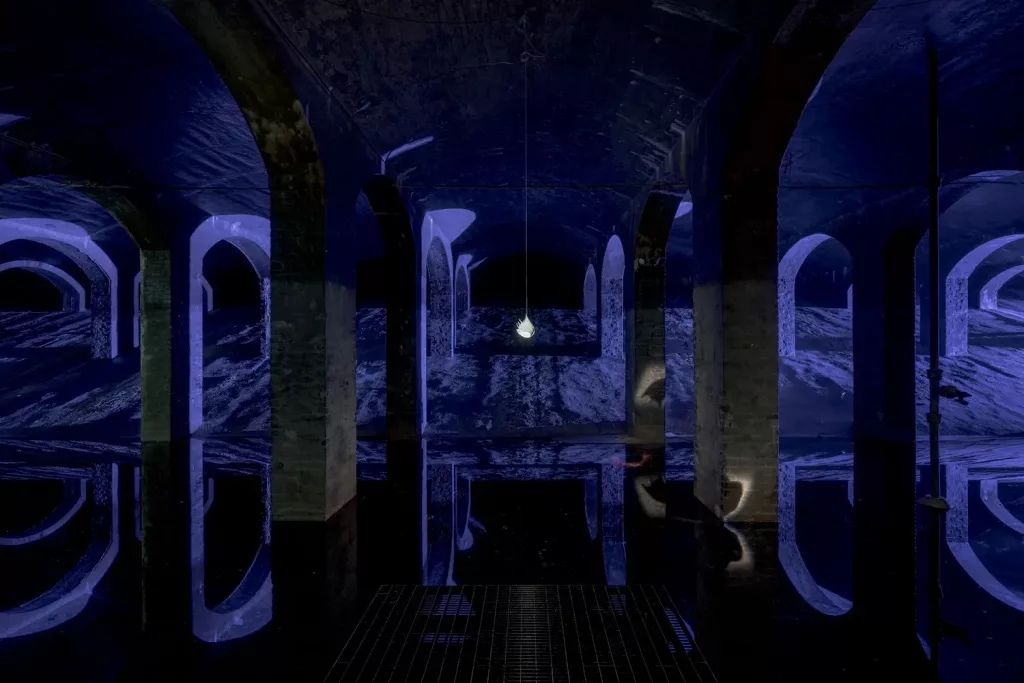
Start Again the Lament
There was a reason for the darkness, I was visiting during Taryn Simon’s “Start Again the Lament”. This installation utilised the echoing inside the Cisternerne, projecting recitations of loss with the lamentations of professional mourners.
I’m not an expert when it comes to art but I do know that good art shifts our perspectives towards important, yet often neglected, viewpoints. But in the Cisternerne, I was overcome. I have never been affected by art in the same way. As I took each step further and further into the darkness, I was taking a step further into uncertainty. I became lost, even though I knew the path that lay ahead. I could feel the pain and grief of the mourners flow through me. The initial wave of the recording was the strongest, and each echo of the pain numbed, or I became accustomed to it. Much like we do with real grief, the pain never goes.
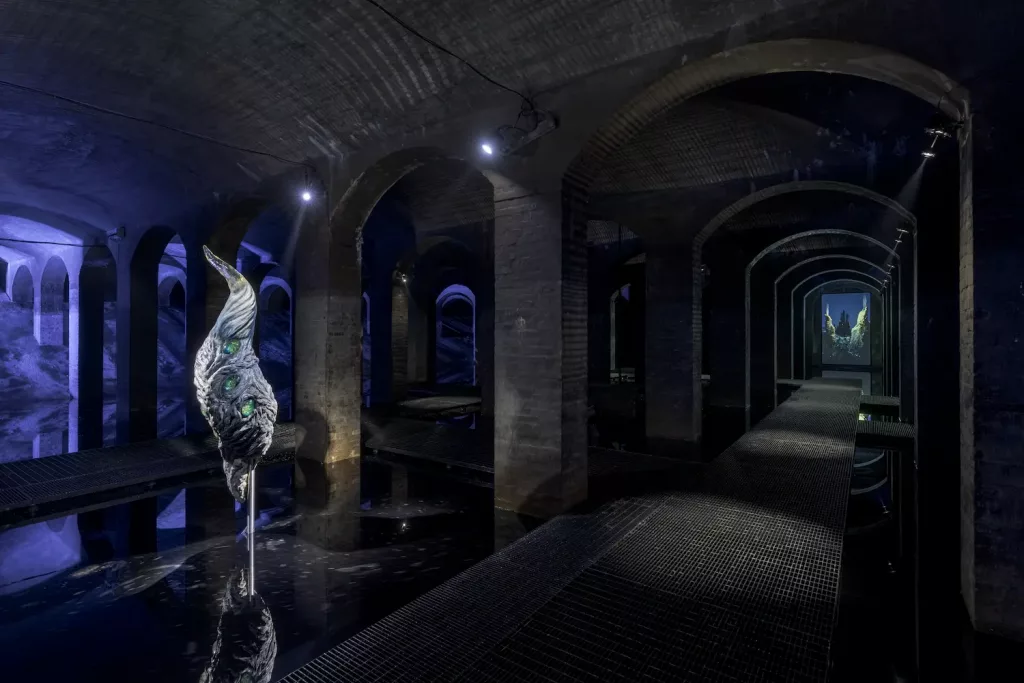
Slowly though, my body became accustomed to the experience. I never got used to the lack of light; maybe it was the neon, but my eyes just never seemed to adjust. Instead, I got more confident walking in the darkness. With each step just slightly less tentative than the last. Before I knew it, that last step took me to the door, and I stepped out into the light.
Where to Stay in Reykjavik
During my trip to Reykjavik, I stayed at Center Hotels Arnarhvoll, which was ideal for exploring the city while also being close to bus stops for day trips and my return to the airport. If you plan on visiting the Secret Lagoon as part of an organised Golden Circle tour, staying centrally makes pick-up and drop-off much easier.