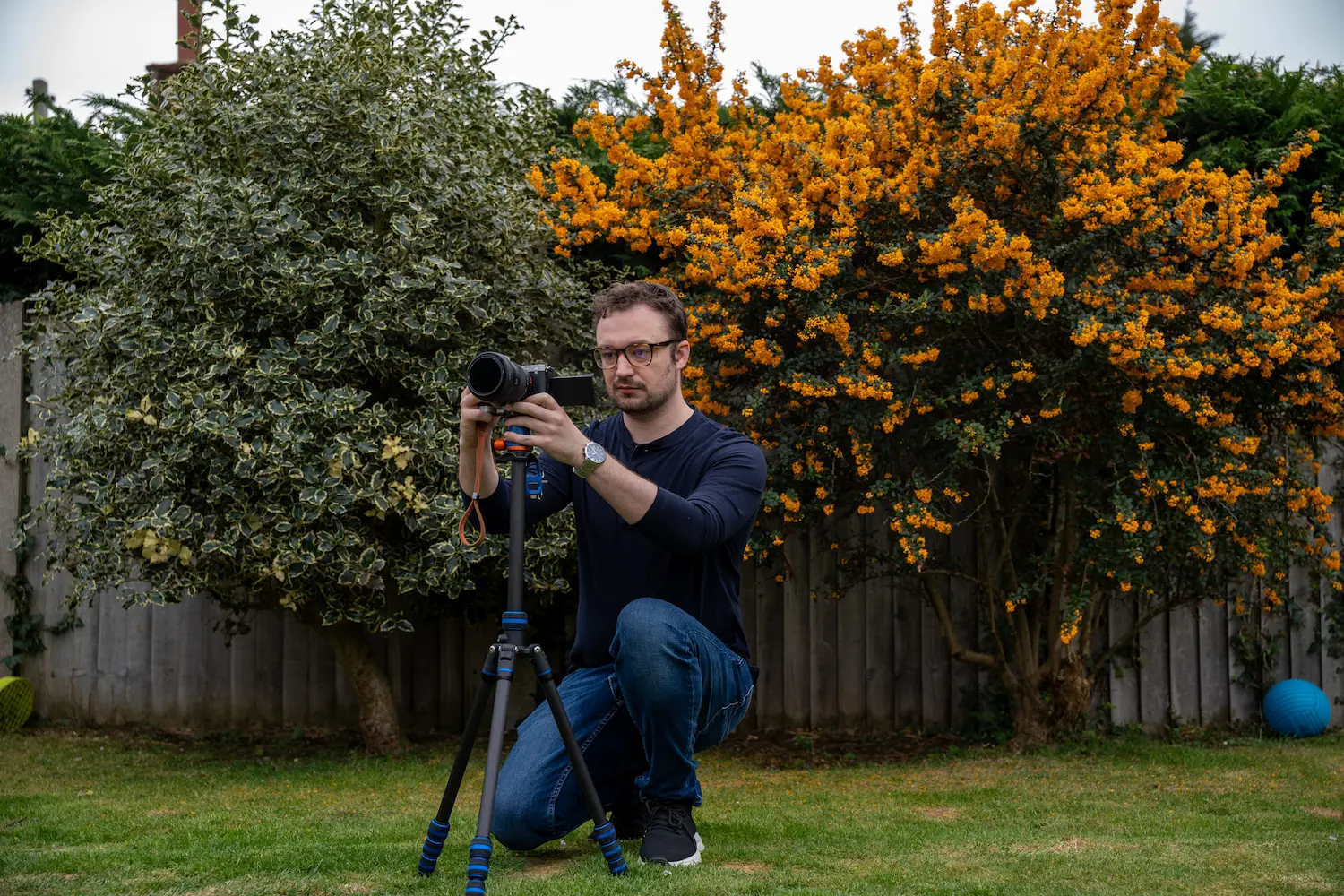
3 Legged Thing James Review
Tripods are often one of the first accessories photographers invest in. It was certainly one of mine. But over time, what we need from a tripod changes, and traditional tripods can’t always adapt. That’s why I was happy when 3 Legged Thing reached out asking me to test James, a tripod designed to change that.
Some links in this post are affiliate links, to learn more about how we use these, read our disclaimer.
- 3 Legged Thing James Review
- James Tripod: Quick Summary
- James Tripod: Technical Details
- A Modular Tripod System
- My James Setup
- Where to buy a James Tripod
- Setting Up and Using the James Tripod
- Stability and Real-World Performance
- Is the James Tripod Good for Travel Photography?
- James vs Billy 2.0: Which Tripod Would I Choose?
- What I Liked About the James Tripod
- What Could Be Improved?
- Who Is the James Tripod Best For?
- Which Legs Should I pick?
- Is the 3 Legged Thing James Worth Buying?
- James Tripod: My Final Verdict
- Travel Photography Gear Favourites
James Tripod: Quick Summary
A versatile and compact travel tripod that offers impressive customisation, although the lack of a centre column won’t suit everyone.
Pros
Cons
James Tripod: Technical Details
| Feature | Details |
|---|---|
| Main Materials | Carbon fibre, magnesium alloy canopy |
| Weight | 1.17kg, 5-section legs and without head |
| Max Height | 123cm |
| Folded Length | 42.5cm |

A Modular Tripod System
James isn’t just a tripod, it’s a modular system. Many of its components can be removed, swapped or even used individually, allowing you to adapt it to whatever you need at the time.
You can choose everything from the head and legs to the canopy and feet. You can even remove one of the legs and use it as a monopod. There are also different colour options, although I personally think the green looks best.
My James Setup
The setup I chose for my James was the 5-section legs, and was given the Airhed Vision multi-use head. You can use this head for photos as well as video, making it really versatile. But you can use the Airhed Neo if you want to focus just on photography and have an even lighter kit.

Where to buy a James Tripod
Ready to upgrade your tripod? Explore the 3 Legged Thing James range and find the perfect setup for your photography.
Setting Up and Using the James Tripod
Out of the box, the James is preassembled. It features twist lock legs that are now grooved so it’s easier to lock and unlock. The only thing I needed to add was my choice of head
If you want to switch legs, it’s really easy using the threads. As well as adjusting the angle. At one point during my trip to Fuerteventura, I wanted to get the tripod head tight up against a wall. What I did was put a single leg at a 90° angle, and stable it against the wall, with the other two legs flat on the floor.

Stability and Real-World Performance
I tested the James on two trips back to back, I worked in Fuerteventura on a photography trip with models, and then again for a travel blogger conference in Hamburg.
In Fuerteventura it got the most use, holding my Godox Lights. We shot in a variety of locations, the easiest was the Villa but the garden stones were uneven. Later on we shot near windmills and on sand dunes.
Each location was different to the last, the only constant was my tripod. I was easily able to angle the legs a bit lower and wider when I needed more stability. The James can angle the legs so it’s almost flat to the ground, sacrificing height for more stability, which came in handy when the weather picked up at the Windmills.
Is the James Tripod Good for Travel Photography?
The James absolutely can be amazing for travel photography, however I think the setups vary and some are more suitable than others.
In my opinion I think the 5-section legs are the best choice for travelling. They’re the shortest and lightest of the setups, which is exactly what I want when I’m already carrying plenty of camera equipment.
During my trip to Fuerteventura and London, I carried James separately in its protective case. Although I’d prefer to keep everything inside one backpack, my backpack wasn’t an actual camera bag and in London I carried a sling. But I appreciated how compact the tripod was.

Of course choosing the smaller legs means sacrificing some height. There was one occasion in Fuertavanture when I was using it for lighting, and I wished it could have stretched just a little bit further.
But that’s what I love about the modular system. If I know I’m going on a trip where height is more important than portability, I can swap to longer legs rather than buying another tripod.
James vs Billy 2.0: Which Tripod Would I Choose?
The PUNKS Billy 2.0 has been my favourite full-size tripod for a while, but after travelling with James, I think I have found a new favourite.
I took the Billy 2.0 to Croatia last year, while James accompanied me to Fuerteventura and Hamburg. Both performed well, but I really appreciated how much slimmer James was when packed away, making it easier to fit alongside my other camera equipment.
One of the biggest differences is the lack of a centre column. This helps James maintain its compact design, but it also means sacrificing some height and the option to invert your camera using the column.
The other consideration is weight. James with 5-section legs weighs just 1.17kg without a head, although my AirHed Vision adds another 455g. Depending on your choice of head, the complete setup isn’t necessarily lighter than Billy 2.0.
However, James has a big advantage when it comes to adaptability. Being able to choose different leg lengths and swap components means I can customise the tripod depending on what I’m photographing.
Ultimately, both are excellent tripods, but for my lifestyle, packability and versatility are my biggest priorities. That’s why James would now be my first choice for travelling.
What I Liked About the James Tripod
What I love about James is how adaptable it is. Being able to change the legs is great, but that means you don’t have to have all three the same. There are also additional accessories, including Flatz, that would allow me to experiment with different configurations. I didn’t have these with me in Fuerteventura, but it’s another example of how versatile the system can be.
Another thing I really like is how compact James is. Compared to my Billy 2.0, the slimmer design makes it much easier to pack alongside my other camera equipment.
James with the five-section legs weighs just 1.17kg without a head. However, the AirHed Vision adds another 455g, so the total weight depends on the configuration you choose. For me, it’s the combination of portability and versatility that makes James such a great travel tripod.
I also love the grooved grips. I know the rhyme right tight lefty loosey, but on a shoot I will always get it wrong at least once. On the James they are grooved so I know exactly which way to twist. I haven’t gotten it wrong once since.
What Could Be Improved?
One thing to consider is the lack of a centre column. In many ways I like that it’s gone because it makes the tripod pack down tighter. However a centre column is a really quick and easy way to change your camera’s height without having to adjust all three legs.
At the moment you can swap the canopy of the tripod. James is actually the name of the canopy, whilst the larger version is Jason. All the legs and components are interchangeable between the two. I don’t need that column all the time, so perhaps in the future 3 Legged Thing can introduce a canopy that includes that column again for when you need it.
Who Is the James Tripod Best For?
The James is so versatile, it’s ideal for the majority of photographers. You can customise it in so many ways you can make it almost exactly what you need. Whether that’s maximum height and stability, or compactness and practicality.
Which Legs Should I pick?
This is the biggest decision to make when picking a James Tripod, but the great thing about a modular system is you can always change your mind.
I went for the 5-section legs, it packs down to the smallest and I want something that takes up minimal space when I travel.
You also have the 3-section option. These legs are longer and give more height and stability.
There’s also a 4-section choice, and this acts as a middle ground, giving you a bit of both of the other options.
Choose whatever is most suitable for your style of photography. I did have a moment on a photoshoot where I knew I would need just a little extra height than the 5 section was capable of.

Is the 3 Legged Thing James Worth Buying?
With tripods you get what you pay for. I have tested a few over the years, and the cheaper they are the less sturdier they become. With the cheapest ones made of plastic and completely unreliable for anything bigger than an action camera, and even some midrange ones like the K&F concept after a year completely coming apart.
There will always be a cheaper option, but buy cheap, you buy twice. I have never had an issue with their other model the PUNKS Billy 2.0, and the quality remains here with the James.
Another advantage of the modular system is that individual components can be replaced, potentially saving you from having to buy an entirely new tripod if something breaks.
James Tripod: My Final Verdict
Good camera gear is always an investment, but I would happily recommend this to any level of photographer. If you are a seasoned pro and know what style of shooting you like to do, then it has the high quality that you want.
If you’re new to using a tripod, James is lightweight and compact enough that you won’t feel too guilty about bringing it along, even if you don’t end up using it. But also its own adaptability means it has the potential to grow alongside as you grow yourself into your own style of photography.